
 |
|

Toll-Free 1-888-484-9560
Store Locator | NOW HIRING FOR NY STORES


Trailer Connectors

 |

Hopkins Towing Solution's® has been a trusted name in the trailer wiring / towing market for over 50 years. Each of their products are engineered for ease of use and built to last. Hopkins Towing Solution's® utilizes OEM connectors for a guaranteed fit. By incorporating OEM connectors, you can have the peace of mind that the towing connector you have just purchased will fit properly and be weatherproof.
Each of the Hopkins towing connectors are 100% electrically tested for assured quality:
n Static Test
n Hi-Potential Stress Test
n Optical Color Testing
n Crimp Pressure Analysis
Hopkins Towing Solution's® offers several products for all your towing needs, such as: plug-in simple!® adapters, vehicle wiring kits, and power sockets.
plug-in simple!® adapters
Plug-in simple!® adapters take the guesswork out of vehicle-to-trailer wiring. Pre-wired adapters allow you to create a custom plug-in simple® wiring system appropriate for any towing situation.
4-Wire/5-Wire Flat Adapters
4-wire/5-wire flat adapters are most commonly used trailer plugs. The 4-wire plug is found on small boats trailers, utility jet ski trailers, snowmobile trailers and small camper trailers where right turn/brake, left turn/brake, tail/marker lights and ground are needed. The 5-wire plug is found mainly on boat trailers.
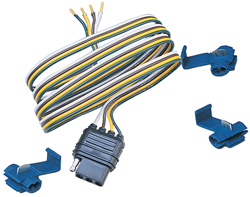
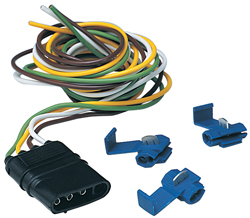
4-Wire Flat Adapter/Vehicle End 4-Wire Flat Adapter/Trailer End
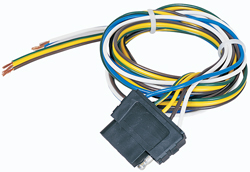
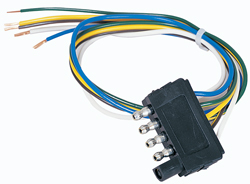
5-Wire Flat Adapter/Vehicle End 5-Wire Flat Adapter/Trailer End
4-Pole Round
The 4-pole is found on small boats trailers, utility jet ski trailers, snowmobile trailers and small camper trailers where right turn/brake, left turn/brake, tail/marker lights and ground are needed. However, 4-pole rounds do not possess an industry standard wiring code.
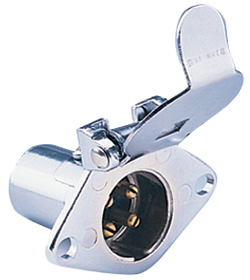
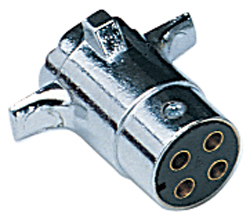
4-Pole Round/Vehicle End 4-Pole Round/Trailer End
5-Pole Round
5-pole rounds provide one additional function not found in 4-pole rounds. This extra function is typically used for electric brakes, auxiliary or backup function.
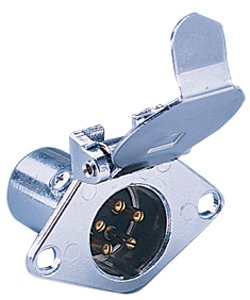
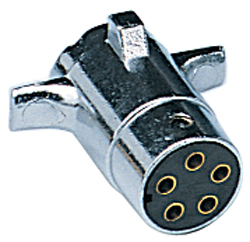
5-Pole Round/Vehicle End 5-Pole Round/Trailer End
6-Pole Round
6-pole rounds provide two additional functions not found in 4-pole rounds. This functions are electric brakes and an auxiliary power lead. The most common use for this type of plug is for horse trailers.
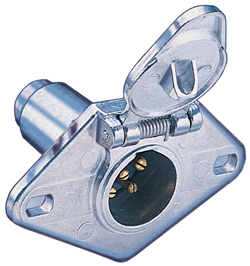
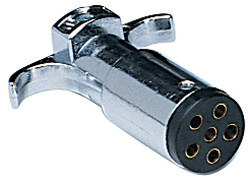
6-Pole Round/Vehicle End 5-Pole Round/Trailer End
7-Pole RV Blade Round
7-pole connectors are typically used with large trailers (RV and industrial). These connectors provide all the functions of the 6-pole with the addition of backup/reverse function.
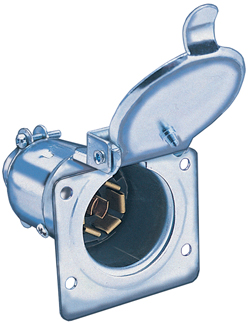
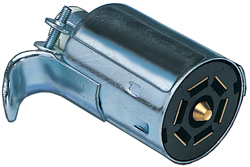
7-Pole RV Blade Round/Vehicle End 7-Pole RV Blade Round/Trailer End
vehicle wiring kits
Unplug your vehicle's factory wiring harness and plug in a Hopkins® vehicle wiring kit. There is no cutting or splicing required. That's how easy trailer wiring is with a Plug-In Simple!® wiring kit, featuring OEM connectors for a perfect, weather-tight fit.
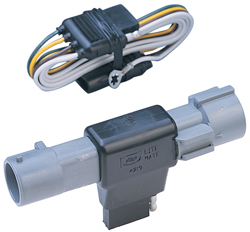
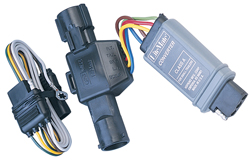
Sample: 1986-92 Ford Ranger Sample: 1993-02 Mazda Pickup
power sockets
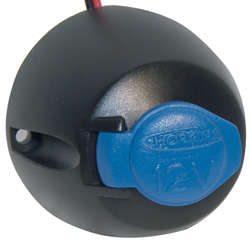
The power sockets help you get 12-Volt power wherever you need it on your vehicle. They're great for tailgating, camping, hunting, boating, emergency use...and countless other applications. Products that can plug into a 12-Volt socket include blenders, coolers, air compressors, spot lights, radios, TV's, etc. The power socket requires no drilling and has a weatherproof dust cover.


"Quick and easy. No html errors" (7/22/21)
-"This is my first experience with Auto Barn. It has been a good experience so far and I look fwd to doing more business with Auto Barn as long as I continue to have as good of an experience as this one has been. Thanks" (7/21/22)
-"Was a good experience overall" (7/20/22)
-"Available product, easy order, quick shipping, and excellent product. Highly recommend Auto Barn, and this product!" (7/17/22)
-
View Items in Cart

 And Get An Instant Coupon Code
